How to define water-soluble high pigment carbon black?
As the name suggests, water-soluble carbon black is a specialty carbon black that dissolves in water. Its greatest strength is its environmental friendliness. Although it exists in powder form, dissolving it directly in water prevents its airborne dispersion, as long as it’s not exposed or refilled. This also facilitates transportation and storage—a key advantage. The following article explains it in detail.
What is water-based carbon black? Recommended applications for water-soluble, high-pigment carbon black:
With the country’s increasing emphasis on environmental protection, all products now promote environmentally friendly practices, including carbon black products in the chemical industry. Previous oil-based carbon blacks are increasingly failing to meet environmental standards, leading to the widespread adoption of water-based carbon black. This article will provide some information on water-soluble, high-pigment carbon black, hoping it will be helpful.
What is water-based carbon black?
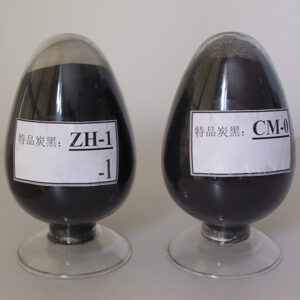
Water-based carbon black, also known as water-soluble high-pigment carbon black, is characterized by its ability to dissolve and disperse directly in water without the need for any additives. It exhibits high tinting strength and is a black powder with particle sizes ranging from 20nm to 30nm, making it a relatively unique product among pigment carbon blacks.
Wanhua Tianhe Pigment Carbon Black Company has been dedicated to the research, development, production, and sales of carbon black products for many years. We have established a comprehensive production line and a rigorous quality inspection system to ensure the quality of every product we produce and sell. Our water-soluble high-pigment carbon black dissolves and disperses directly in water without the addition of any additives and is widely used in water-based inks, colorants, coatings, and paints.
When selecting this high-pigment carbon black, pay attention to its particle size. Particles smaller than 20nm or larger than 30nm will not disperse well and may even coarse, thus losing its unique advantages.
 chemical






HelloPlease log in